This Classic Chrysler Imperial Gave Us Two Industry Firsts Which We Take For Granted Today
This day in age, we don’t have to worry about spending more money on certain options that were once seen as luxuries. For example, if you’re feeling hot in your car in the summer, you simply turn on your air conditioner. Mirrors out of alignment? Just use the electronic controls to realign them to your liking. You no longer need to use the little adjuster sticks, or reach out of your driver’s windows and physically move the mirror to get it where you want it to be.
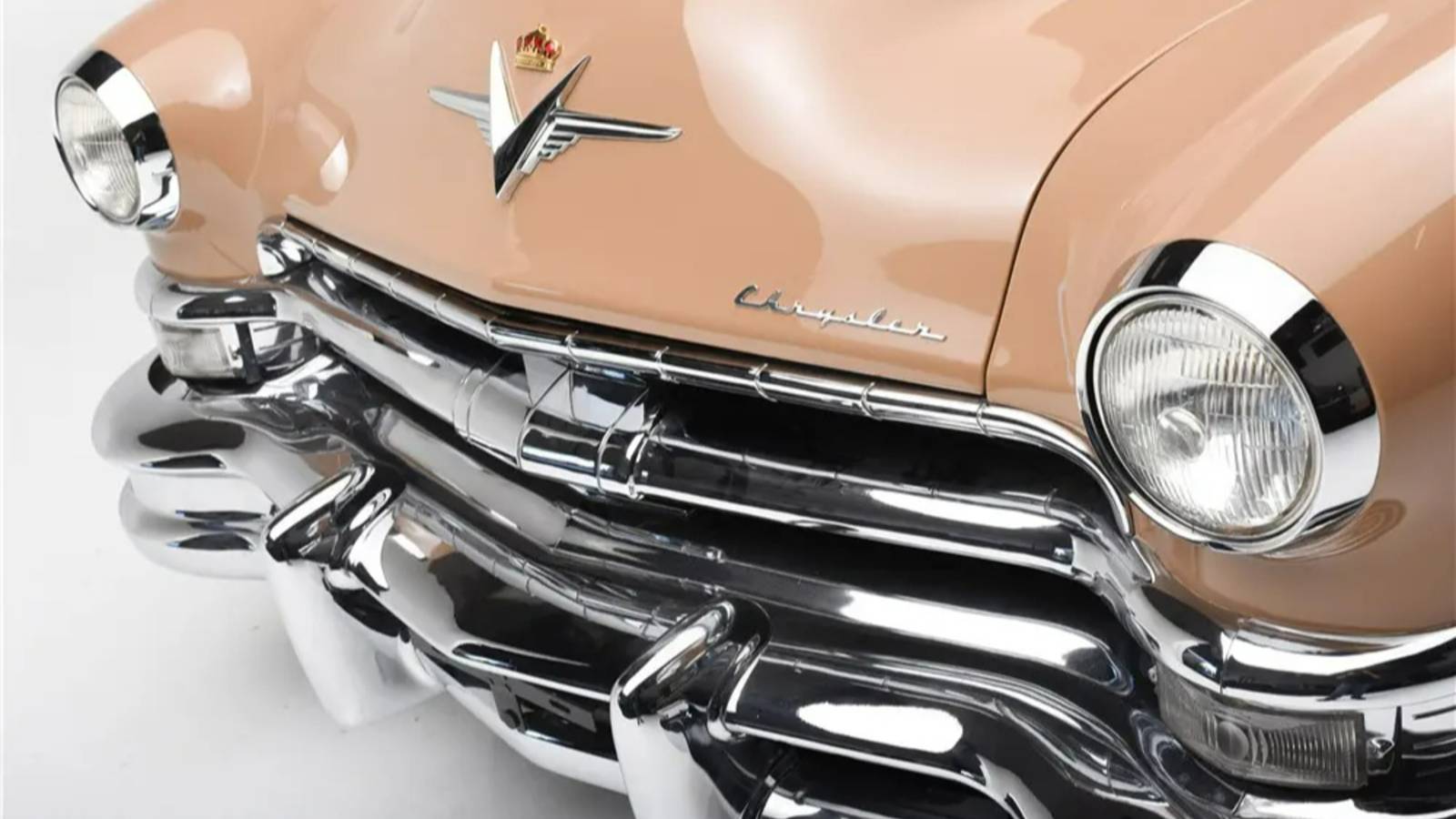
All of these seemingly-small features that are almost universally standard were once uncommon. If you go even further back in their individual histories, they had to come from somewhere. Many power and luxury features such as those were first seen in the 1950s. Our model of interest today, the 1951 Chrysler Imperial, actually offered two options for the first time on a mass-market scale, both of which we take sorely for granted today. However, few remember the thing, and it’s quite a stunner to look at.

Chrysler’s Then-Top-Spec Model

Quick Facts About The 1951 Chrysler Imperial
- Introduced power steering and electric windows on a large scale
- Belongs to the Imperial’s sixth generation
- Sat on Chrysler’s lineup as its flagship model
- Could be had as a coupe, hardtop, or convertible
- Carried less chrome body work than the lower-spec Chrysler New Yorker
The Imperial was one of Chrysler’s longest-running models, and it was also one of its most important. Chrysler as a whole first entered the automotive world a century ago, in 1925. Just one year later, the first Chrysler Imperial debuted. Back then, the company’s founder, Walter P. Chrysler, decided he’d aim his new-found company squarely at the likes of luxury automakers like Cadillac, Duesenberg, Lincoln, and Pierce Arrow. Mind you, taking on brands that boast such pedigree and prestige was no small matter.

Undeterred, Mr. Chrysler unleashed the new Imperial into the market with a surprising amount of success, all things considered. His new company suddenly made a name for itself. In addition to its new model, Chrysler also managed to gain a good amount of fame thanks to a transcontinental speed record, which was won by an Imperial. Following this feat, the Imperial was chosen as the official pace car of the 1926 Indianapolis 500. It was also given a new name alongside the Imperial namesake called “E-80”, as the model was reportedly “guaranteed” an 80-mile-per-hour cruising speed.
It was safe for Walter Chrysler and his company to assume that Chrysler as a brand had successfully made its mark in the American market. A new, revamped iteration of the Imperial hit the market in 1931, sporting hydraulic brakes and a more powerful straight-eight engine. In 1934, Chrysler’s “Airflow” design debuted on the Imperial, showcasing one of the first times an automaker utilized aerodynamic research for a production car.

The airflow look was more or less abandoned with the 1937 Imperial model year, as it took on a much more conventional look. By 1940, the Imperial went through yet another model refresh, although, thanks to World War II, this iteration would last all the way up to 1948. 1949 saw the introduction of a much more modern, low-slung, and decidedly 1950s-looking Imperial. The 1949 model year also brought the first standard set of disc brakes ever seen on a production car.

This Jet-Age American Stunner Was Powered By Chrysler’s Firedome Hemi Engine
The DeSoto Fireflite was a premium model from the 1950s with Hemi power.
Sometimes, Lightning Does Strike The Same Place Twice
The introduction of standard disc brakes was a large enough breakthrough on its own, but Chrysler didn’t seem to be done with the groundbreaking innovations just yet. Two years later, the Chrysler Imperial dropped a lot of its chrome trim, simplified its grille look, and took an eraser to some of the interior to make it more minimalist. It also showcased the world’s first set of fully-electric windows ever fitted to a production car, along with the first traditional power steering system.

It’s important to note that the ’51 Imperial’s electric windows were the first fully electric system, they weren’t the first automated windows as a whole. In the 1920s, some fully mechanical window operation configurations existed which used a spring-loaded cradle that would automatically roll the window up. Ford, along with General Motors, had hydroelectric windows installed in select models in the 1940s. However, these systems used hydraulic fluid in conjunction with electricity.

As if there wasn’t already enough big-brained energy swirling around at Chrysler headquarters in 1951, the brand also introduced the first iteration of its most popular engine: the Hemi V8. This first version was a 331 CID called the FirePower engine. The mill was originally developed for use in Republic P-47 Thunderbolt fighter aircraft prior to the end of World War II. However, once the conflict was over, the motor was redesigned for use in cars.

Chrysler’s New Special Edition Is A Sad Ode To 100 Years Of Incredible Innovation
How do you celebrate 100 years of innovation? Surely not with a minivan?
Under The Hood

|
Engine Details |
331 CID (5.4L) NA V8 |
|---|---|
|
Horsepower |
180 hp |
|
Torque |
312 lb-ft |
|
0-60 MPH Time |
13.4 seconds |
|
Top Speed |
107 mph |
|
Curb Weight |
4,380 lbs |
The then-new Chrysler FirePower Hemi V8 was a technological marvel for its time. Owing to its airplane-inspired roots, the FirePower engine came equipped with hemispherical heads, which allowed for a greater surface area for actual combustion to take place. In essence, more surface area for combustion equals more power with a smaller overall displacement. However, the downside to the original FirePower engine was its complicated, finicky valvetrain and heavy weight. In addition, it actually takes up more space under the hood than other engines with a similar capacity.

Handling the FirePower’s power is a four-speed semi-automatic transmission which Chrysler called the Fluid-Torque Drive. It was also called the Presto-Matic. Rear-wheel drive was the sole drivetrain option. Its suspension system consisted of an independent setup on the front axle, and a live axle supported by leaf springs and tubular shock absorbers in the rear. Stopping was taken care of thanks to its set of Ausco self-energizing disc brakes.

Every Time Chrysler Tried To Build A Turbine-Powered Car
The turbine engine was meant to be the automotive propulsion method of the future. Things, however, didn’t quite work out that way for Chrysler.
The Imperial Lived A Long Life

Beginning in 1955, Chrysler decided to spin off the popular Imperial model into its own brand entirely. The reason behind the move was to position Imperial as a more-direct competitor to Cadillac and Lincoln, as most folks compared Chrysler to makes such as Buick and Mercury at the time. The move was moderately successful. However, it was discontinued following the 1983 model year. By that time, most people referred to Imperial-branded cars as Chrysler Imperials. This was no doubt helped by Chrysler putting its name on all Imperial models up until 1971, the very same year the Imperial debuted the world’s first production-ready anti-lock braking system.

Once the Imperial name was brought back under Chrysler’s wing, the Imperial itself was discontinued until 1990. That year, the Detroit-based automaker decided to dust off the age-old nameplate for one final hurrah. It was meant to replace the Chrysler Fifth Avenue, a nameplate seen as dated an inferior at the time. However, this final iteration of the Imperial was only meant as a stop-gap solution while the Chrysler LH Platform was being designed and developed. In 1994, the LH platform-based LHS replaced the Imperial, ending the model name’s near 70-year on-and-off run.
Judging by the sheer number of innovative features that the Imperial namesake is credited with, we can honestly say it was one of the best runs for any nameplate in the history of cars.
Sources: ImperialClub.com, HowStuffWorks.com, Over-Drive-Magazine.com
link