The Weirdest Partnerships In Automotive History
In a world where it is wise to keep your friends close, and your enemies even closer, car companies have formed some peculiar partnerships, resulting in even more peculiar products. Like a Chrysler, that is also a Maserati, of sorts. Or a 322 hp Mercedes-Benz, running a sports suspension developed by Porsche, and also built by its German rival.
We list 10 of the world’s weirdest, most unusual joint ventures, resulting in products that, mostly, failed to achieve any traction in a competitive marketplace.
For this list, we researched some of the most unusual partnerships between automakers. In some cases, the results of those partnerships were pretty cool. Mostly, not so much. This list is ranked according to model year, from old to new.
10
1978 BMW M1
Partnership: BMW M Division & Lamborghini
|
Engine |
3.5-liter Inline-6 |
|---|---|
|
Horsepower |
273 hp |
|
Torque |
243 lb-ft |
|
0-60 |
5.6 seconds (estimated) |
The M1 started off as a joint venture between BMW and Lamborghini. In the late 70s, BMW had an eye on circuit racing, but did not have the capacity to build the required number of mid-engined homologation specials.
Lamborghini was tasked to create the car’s chassis, build prototypes and eventually manufacture the vehicles, as it was paid a small fortune to get the project up and running. But Lamborghini’s financial woes soon forced BMW’s hand. BMW reclaimed the project, bringing new partners on board (including some ex-Lamborghini engineers), and the magnificent BMW M1 was the result.
9
1983 Alfa Romeo Arna
Partnership: Alfa Romeo & Nissan
|
Engine |
1.5-liter boxer-4 |
|---|---|
|
Horsepower |
94 hp |
|
Torque |
98 lb-ft |
|
0-60 |
11.5 seconds (estimated) |
* Alfa Romeo Arna 1.5Ti listed above
You may imagine the name Arna refers to some ancient Italian warrior, or wine, or pizza. It is actually an acronym for Alfa Romeo Nissan Autoveicoli. The theory seemed brilliant: infuse a reliable Nissan Cherry hatch with some Alfa Romeo character, passion and performance. The Nissan parts, including body panels, were shipped to Italy where the Arna was put together. And that’s where the wheels started coming off.
By all accounts, the little hatch’s quality was far below par. It was powered by a range of Alfa Romeo flat-four engines, and it also had Alfa manual gearboxes, front suspension and braking systems. Just over 50,000 cars were eventually made over a four-year period. When Fiat bought the ailing Alfa Romeo company in 1987, its first intervention was to cancel Arna production.
8
1989 Chrysler TC By Maserati
Partnership: Chrysler & Maserati
|
Engine |
2.2-liter, turbocharged inline-4 |
|---|---|
|
Horsepower |
160 hp |
|
Torque |
171 lb-ft |
|
0-60 |
9.5 seconds (estimated) |
In 1984, Chrysler and Maserati signed an agreement to create a new turbocharged coupe (or TC). This car was to serve as an image builder for Chrysler, adding some Italian spice to the US market. The development of the new coupe took five years, apparently thanks to countless disagreements between Chrysler and Maserati engineers. When the TC finally landed up on showroom floors, it cost a pretty penny (and much more than Chrysler’s own LeBaron coupe).
A major stumbling block proved to be the nonsensical manufacturing process. The engine and other parts were shipped from the US to Italy, where the cars were assembled, and then shipped back to America. The engine was another dud. The 2.2-liter four-cylinder engine was turbocharged, but with the regular model only producing 160 hp, performance was as laid-back as the sofa-like front seats. Chrysler apparently lost around $600 million through the TC project, and only about 7,000 cars were eventually made.
7
1990 Mercedes-Benz 500E
Partnership: Mercedes-Benz & Porsche
|
Engine |
5.0-liter V8 |
|---|---|
|
Horsepower |
322 hp |
|
Torque |
354 lb-ft |
|
0-60 |
5.5 seconds |
How do you make a four-door luxury saloon drive like a Porsche sports car? Well, if you are Mercedes-Benz, you rope in Porsche to turn that luxury barge into a sports car of sorts. Enter the 500E, a saloon that soon became known as ‘the wolf in sheep’s clothing.’ In short, Mercedes-Benz wanted a halo performance saloon, along the same lines as BMW’s M5.
Simply throwing a lot of horsepower at the deal only works up to a point. So Porsche designed a new chassis and suspension parts for the saloon. The engine is a five-liter V8 from the SL, tuned to 322 hp. The 500E was also put together by Porsche in its own plant. The saloon was a revelation. It could complete the 0-60 mph run in 5.5 seconds, and go on to a top speed of 155 mph (limited by gearing).
6
1990 Chevrolet Corvette ZR1
Partnership: Chevrolet & Lotus
|
Engine |
5.7-liter V8 |
|---|---|
|
Horsepower |
375 hp |
|
Torque |
370 lb-ft |
|
0-60 |
5 seconds (estimated) |
In the late Eighties, Chevrolet came up with an ambitious marketing plan: to create the fastest production car in the world. Chevrolet had acquired the famous British firm Lotus in 1986, and it roped in the Lotus engineers to assist in its quest.
Those engineers created a new five-liter V8 engine that would fit straight into the C4 frame, with double overhead camshafts and 32 valves, upping the game over Chevrolet’s own 16-valve, overhead valve V8. The result was a high-revving, high-performance engine, living in an active suspension set-up, running on similar Bilstein parts used in the Porsche 959. Even though the ZR1 did not go on to claim the fastest production car in the world title, it still remains a magnificent tour de force for all American sports cars, thanks to Lotus’ input.
5
1993 Honda Crossroad
Partnership: Honda & Land Rover
|
Engine |
3.9-liter V8 |
|---|---|
|
Horsepower |
178 hp |
|
Torque |
230 lb-ft |
|
0-60 |
11.5 seconds (estimated) |
In the Nineties, Japanese car company Honda wanted in on the booming SUV segment. With its own CR-V still in the making, Honda knocked on Land Rover’s door, and slapped some Honda badges on the British company’s popular Discovery. As it turns out, the Honda Crossroad was the only Honda ever to be powered by a V8 engine. Ironically, that V8 engine had American origins, and came from the Buick parts bin.
Sold predominantly in the Japanese domestic market, the Crossroad failed to fool Honda customers. It was clearly a Land Rover, and not a Honda, even if it wore a Honda badge. Additionally, the Crossroad did not live up to Honda’s regular quality standards. Sales were slow, with only about 10,000 cars sold over a period of six years.
4
1997 Kia Vigato
Partnership: Kia & Lotus
|
Engine |
1.8-liter Inline-4 |
|---|---|
|
Horsepower |
150 hp |
|
Torque |
123 lb-ft |
|
0-60 |
7.5 seconds (estimated) |
South Korean company Kia bought the tooling and production rights for the Lotus Elan in the Nineties, with an eye to selling its own version of the Elan in South Korea and Japan. Kia installed its own 1.8-liter, Hi-Sprint naturally aspirated four-cylinder engine, linked to a five-speed manual gearbox driving the rear wheels.
The car was sold as the Kia Elan in South Korea, and the Kia Vigato in Japan. Thanks to its light-weight, fiberglass composite body, the Vigato was no slouch, reaching 60 mph in around 7.5 seconds, with great handling to boot. Less than 1,000 cars were made.
3
2012 Aston Martin Cygnet
Partnership: Aston Martin & Toyota
|
Engine |
1.3-liter inline-4 |
|---|---|
|
Horsepower |
98 hp |
|
Torque |
92 lb-ft |
|
0-60 |
12 seconds (estimated) |
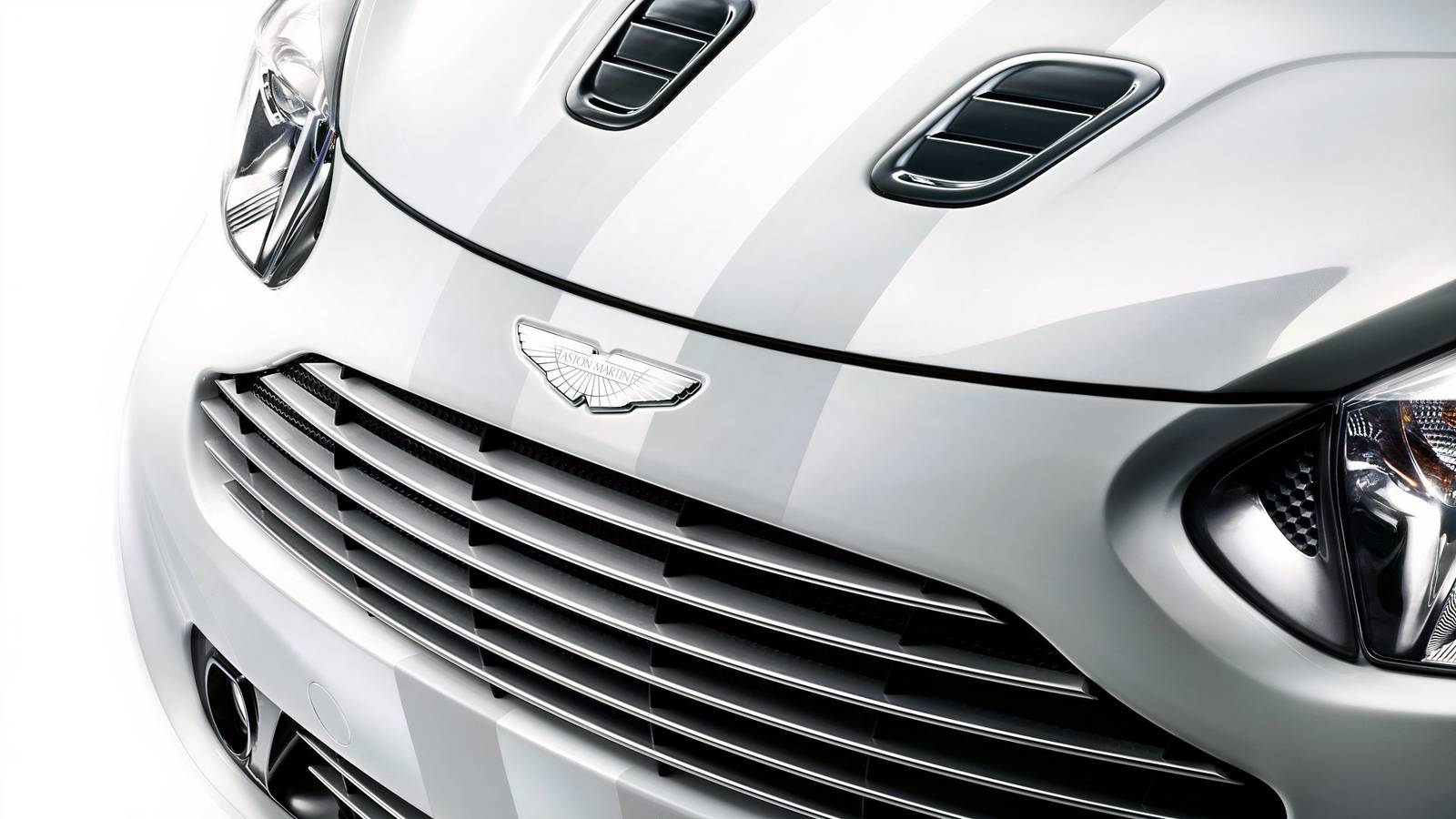
In 2009, Aston Martin entered an agreement with Toyota to turn the Japanese brand’s iQ city slicker into, well, an Aston Martin. It did so only by name, and by trim levels. Why? Emission regulations. Aston Martin needed a small and economical car to offset the rather substantial emissions from its high-end V8 and V12 sports cars. Aston Martin said the Cygnet was the brand’s interpretation of a luxury city car. But you can paint stripes on a coyote and call it a tiger, but it still won’t be a tiger.
Customers seemed to agree with the coyote part. Production was halted after just two years, with less than 1,000 cars made.
2
2016 Abarth 124 Spider
Partnership: Fiat & Mazda
|
Engine |
1.4-liter, turbocharged inline-4 |
|---|---|
|
Horsepower |
168 hp |
|
Torque |
184 lb-ft |
|
0-60 |
6.8 seconds (estimated) |
The Mazda Miata MX-5 is one of the greatest sports cars ever made. With near perfect weight distribution, rear-wheel drive, magnificent feedback for the driver, and rev-happy, naturally-aspirated engine, the small convertible is one of the greatest driver’s cars ever made. But, more horsepower never hurt anyone. Enter the Abarth 124 Spider, essentially a Mazda MX5 under the skin, powered by a turbocharged 1.4-liter Fiat engine with 168 hp and 184 lb-ft of torque in the game. This is the dream MX5, right?
Well, no. Customers just couldn’t get over the Fiat line. Despite having all the right credentials on its CV, the Abarth 124 Spider sold, but not nearly as well as Fiat thought it would. About 40,000 cars were made over a four-year period.
1
2018 Mercedes-Benz X-Class
Partnership: Mercedes-Benz & Nissan
|
Engine |
2.3-liter, twin-turbocharged inline-4 diesel |
|---|---|
|
Horsepower |
188 hp |
|
Torque |
332 lb-ft |
|
0-60 |
10.5 seconds (estimated) |
* Mercedes-Benz X250d model listed above
This weird partnership was, truth be told, a disaster looking for a place to happen. Instead of developing its own truck, Mercedes-Benz decided to base its product on the existing Nissan Navara. The new X-Class got the same 2.3-liter, twin-turbocharged four-pot diesel engine with a rather pronounced whine. Mercedes-Benz gave the truck a new interior, but it was just okay, and never great. And then it slapped a hefty premium on the truck, selling for considerably more than a comparable Nissan Navara.
Mercedes-Benz also spent millions of dollars on marketing the new X-Class as the first ‘premium’ truck. But it was to no avail. Customers saw straight through the X-Class, and were unwilling to pay that premium for what is essentially a Nissan truck. The Mercedes-Benz truck was only on sale for three years, failing to make any impression on sales charts.
Sources: Mercedes-Benz 500E, Aston Martin, Abarth, Kia, Honda, Chevrolet, Chrysler, Alfa Romeo, BMW M.
link