
The current state, opportunities and challenges for upscaling private investment in biodiversity in Europe
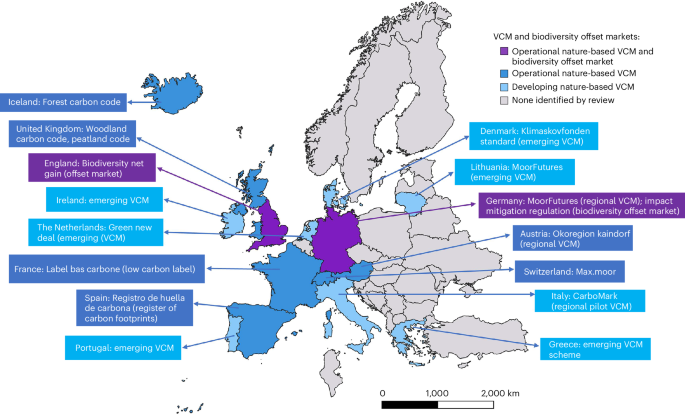
From our interviews with 25 biodiversity finance experts across Europe we identified two key themes regarding the opportunities for upscaling private investment: (1) macroeconomic and political factors driving potential increases in both supply and demand of projects for private finance and (2) various sources of innovation and specialized experience that emerge as these markets develop.
Major economic shifts driving private investment
In our sample, the intensification of rhetoric and efforts to upscale private investment in conservation were fundamentally perceived to be driven by increasing public awareness and demand for policies addressing biodiversity loss, coupled with a lack of trust that governments possessed the capacity or political capital required to directly address the problem through increasing public spending on biodiversity conservation. “So we can continue to think and expect that governments will solve our problems, but they don’t. They have consistently proven in the last 50 years of my existence here on Earth, they don’t … so you need to focus on private markets, and you need to make that work” (P2, nature market broker).
Our interviews pointed to a range of potential drivers of incentives for increased demand for investments in conservation. These included the traditional motivations of corporate social responsibility and marketing19, organizational net-zero and nature-positive commitments46, as well as the voluntary and policy drivers outlined above such as the taskforce for nature-related financial disclosure (TNFD) and CSRD. We noted that interviewees did not substantiate the exact mechanisms through which they thought these supportive policies and initiatives were to drive demand for conservation investment47. Interviewees highlighted interactions between these different mechanisms, with voluntary corporate initiatives often seen as a necessary precursor to the adoption of supporting policies in legislation. Risk management was another key driver29,48, with dependencies of companies on nature especially in corporate supply chains perceived as an increasingly powerful lever for making biodiversity loss material to companies and therefore drive demand for nature-related investments. An increasing number of commodification mechanisms and policies were seen to be creating opportunities to derive cashflows from biodiversity improvements (for example, new and increasingly established nature markets such as biodiversity net gain in England), increasing investability.
On the supply side, interviewees noted the increasing regulation and economic pressures on farming, driving a perceived interest from land managers to diversify their income streams and participate in environmental markets. Additionally, interviewees and focus group participants noted interactions between consolidated land ownership and participation in environmental markets, with landholders or organizations with large non-operational landholdings looking to use these markets as opportunities to generate revenues through land ownership.
Opportunities arising from innovation and experience
Alongside large-scale ‘push–pull’ factors, various innovations and the development of experience within the biodiversity finance sector were perceived as key enablers of further upscaling. Technological innovation including advancements in near real-time biodiversity monitoring (interviewees mentioned images taken through smartphones and standardized sampling protocols, bioacoustics, eDNA and remote sensing) were seen as central49. Interviewees believed it would enable demand by increasing buyers’ ability to obtain evidence that their contributions to biodiversity improvements mattered. However, although several project developers and brokers described in detail their technologically enabled data collection strategies, these interviewees did not describe how counterfactuals would be ensured for valid impact detection. Less attention was paid in our sample to additionality than to monitoring.
Other non-technological forms of innovation were also found to be critical. Interviewees alluded to new markets and asset classes taking a long time to develop and reach maturity, and there was a sense of ‘learning by doing’, leading to the generation of new financial innovations and logistical or legal innovations to enable these new investment classes. These included fund aggregation9 and new types of governance structures such as innovative contract designs including ecological conditionalities and insurance to attempt to guarantee the delivery of the biodiversity enhancement underpinning the investments50. Another key element was the development of skilled practitioners with combinations of conservation and finance expertise to broker between the two disciplines51.
The analysis of interviews demonstrate opportunities for upscaling private investment, especially in the context of increasing economic pressures on farming driving increased interest in diversification and rapid industry innovation. However, our interview analysis indicates that key links are still missing between these conceptual opportunities and real investments delivering scientifically credible results. For example, there is a lack of clarity on the tangible relationships between hypothetical demand drivers such as disclosure frameworks and how exactly these would drive increased investment or on how ecological monitoring enables the estimation of impact.
Challenges to upscaling high-integrity investment
Upscaling private investment in nature faces myriad challenges. In our interviews the overarching themes were the lack of highly profitable investment opportunities and inherent mismatches between the perceived realities of risks and uncertainties of doing conservation in practice and the level of risk that private investors are willing to bear. Conservation is subject to many categories of risk38 and for investments in conservation to deliver risk-adjusted returns competitive with other options available to investors, the cashflows from private investments need to be either sufficiently high to justify the risks31,33 or the risks need to be mitigated (for example, derisking via blended finance). Otherwise, as one interviewee stated: “they [financial institutions] have easier ways of making money” (P20, team leader at a multilateral development institution). One recent paper demonstrated for a biodiversity-focused private equity firm, investments which were nominally delivering biodiversity improvements had a mean target internal rate of return of 14.7% and blended finance deals subject to derisking had a mean of 11.9% (ref. 33). This corroborated evidence from our interviews highlighting the very high returns required to justify the risks of investment and a fundamental lack of mechanisms that can deliver sufficiently high revenues. “I would consider us very risk-tolerant investors, very, in the grand scheme of things. And we’re looking at things that others would definitely not look at. But even for us, so many of the projects we see are just … It’s not clear where the revenues are going to come from” (P17, investor).
We identified three subthemes relating to risk in our interviews: risks relating to politics and regulation, risks stemming from the mismatch between the complexity of ecology and the needs of investors, and risks stemming from social perceptions and inequities.
Political and regulatory risk
Interviewees noted that the ecological success of mechanisms for attracting private investment into conservation would require political will and substantial investment in ensuring high-quality governance, just as public-sector-led conservation investment would52; except one interviewee (P2, nature market broker) who felt state intervention would undermine their effectiveness. Nearly all participants noted therefore that the development of market-based approaches for conservation financing are a complement, not a substitute for genuine political will for addressing biodiversity loss; the ecological outcomes of either state-led or private-led investments in conservation outcomes hinge on that same political will31,52. Inconsistent political will to address biodiversity loss translates into widespread regulatory uncertainty, a key barrier to both supply and demand for conservation outcomes and therefore to the certainty of cashflows generated through such investments. On the demand side, investors seek a high degree of confidence that there will be a market for the biodiversity benefits generated so that they can sell commodified biodiversity increases to generate cashflows, but the looming threat of governments weakening or removing legislation that is the driver of this demand was a major driver of risk. On the supply side, this same regulatory uncertainty was perceived as a large barrier to initiating the enrolment of land managers into delivering conservation land management.
Mismatches between finance and ecology
Some conventional critiques around the commodification of nature appeared in our interview dataset of interviews (for example, relating to non-fungibility, unsuitability for some types of biodiversity, emphasis on carbon over biodiversity and risks of greenwashing)53,54,55,56,57,58,59. Beyond these concerns, there were additional risks hindering the upscaling of investment. A main barrier to investment cited by investors was the cost of monitoring and the lack of ecologically realistic metrics to evidence increases in biodiversity51. Therefore, investors often use proxies for signalling the biodiversity value of the investment, which might be some form of sustainability certification in the case of agriculture or forestry-related funds35 or biodiversity or carbon metrics aligned with offset certification schemes or national legislation. However, periodic impact evaluations demonstrate that many of the proxies on which they rely often overstate the contributions of these investments to enhancing nature16,39,40,55,60,61. The lack of accepted metrics is a barrier, as interviewees noted, because even well-intentioned purchasing of biodiversity or carbon outcomes using a commodification mechanism or key performance indicators, may present a reputational risk if subjected to public criticism. Participants and focus groups highlighted that carbon credits were by far the main well-developed bankable revenue streams to date, presenting challenges as the kinds of projects and ecologies optimizing for carbon were misaligned with those optimizing for biodiversity.
Additionally, interviewees noted both spatial and temporal mismatches between conservation and the needs of investors. Temporally, conservation was perceived as requiring large up-front investments for uncertain long-term payoffs11, a challenge both because of uncertainties regarding the long-term potential revenues from the investment, and because enroling in selling biodiversity-related outcomes meant land managers would have to forgo their existing revenue streams in the short run, reducing their incentives to enrol. One interviewee noted that this alone meant such projects were probably better matched to receiving non-commercial, long-term public investment. Spatially, interviewees noted that areas of high biodiversity value tend to be located in areas of low human pressure and weak institutions, highlighting that these are the very places where institutions are probably too weak to give investors confidence62 (in the context of European investments in the global south).
Risks from social perceptions and inequities
Interviewees and focus groups noted that those best positioned to take advantage of the opportunities created by upscaling private investment opportunities were institutions with rights over key limiting factors, such as land, or previous experience of social and environmental management for large land-based projects, such as businesses with large non-operational estates; therefore interviewees acknowledged that expanding biodiversity-related investment opportunities have the potential to exacerbate pre-existing inequities. Engagement with local communities at project sites was consistently mentioned by project developers as something that was a ‘nice-to-have’, but resource shortages frequently meant that these activities were deprioritized beyond just satisfying the basic requirements of legislation or accreditation schemes. On the other hand an investment advisor (P5) argued that effective social engagement was an essential risk management tool, as they perceived effective management of social risks to correlate with the good governance required to address other project risks. Additionally, interviewees recognized that inequities may pose a reputational risk to the credibility of these markets themselves through public opinion, especially in the context of blended finance, in cases where public funding backed by taxpayers would be used to derisk investments for financial institutions63.
The role of public policy
The role of public policy was emphasized by all interviewees. A diversity of views were represented, from perceptions of government as the stifler of market innovation and real action to address biodiversity loss (P2, nature markets broker), to government’s emphasis on scaling up private investment being a ‘symbolic instrument’42 designed to impose minimal disruption and ultimately legitimize prevailing unsustainable business practices (P19, director of a sustainable finance non-governmental organization (NGO)), through to cautious optimism about the attempts of public policy to internalize biodiversity into business and investment decisions contingent on high-quality governance and enforcement (most participants across all stakeholder groups). We identified two core themes: recognizing biodiversity finance as just one small part of the conservation puzzle and identifying that public policy is the key enabler of biodiversity finance. Public policy is presented as the creator of these private investment opportunities yet also their major threat.
Upscaling private finance no substitute for regulation
Interviewees from across all stakeholder groups frequently caveated their expectations around upscaling biodiversity finance by situating it as just one piece of the public policy landscape required to address biodiversity loss. They reiterated the public good nature of biodiversity and the challenge in commodifying most types of biodiversity, and therefore highlighted that public investment remained essential. They recognized opportunities for improving the effectiveness of public investment, including through results-based budgeting. Interviewees emphasized the importance of governments strengthening regulations to prevent biodiversity loss, even arguing that this would help create more opportunities for investors as profitable innovation would be required to overcome constraints created through direct regulation of ecological harms64,65: “So there’s a set of things that should just be banned in my view, and that will really help because it’ll help investors. It will drive up demand for, for example, products that can revitalize highly degraded soil. Why is there less demand for that? Because there is still an option of additional conversion across the world” (P17, investor). This investor-proposed perspective is notable for highlighting that regulation can be a source of innovation rather than merely an economic constraint64,65.
Interviews identified many policies that could be enacted to both address biodiversity loss and facilitate the development of private investment opportunities, including improved data transparency on land management activities66, changes in taxation regimes, financial regulation and supervision67 and investment in biodiversity-related state capacity and skills68 (Supplementary Note).
Public policy as enabler of upscaling and its own worst enemy
Public policy was perceived as the dominant driver of opportunities for investing in nature. Through the creation of biodiversity-related markets, public institutions were framed as the mediators of the outcomes of private finance through the design of well-designed commodification mechanisms that would be aligned with delivering positive outcomes coupled with effective enforcement. Additionally, public funding was seen as necessary to catalyse market opportunities through direct subsidies for projects attempting to enter nascent nature markets and derisking investments in these projects. These perspectives challenge the view that there is a dichotomy between public and private biodiversity finance—substantial public investment in creating, governing and stimulating demand for the markets that public policy itself created was perceived as fundamentally essential: “That is [a change] you’ve got to instigate that at a system level. I don’t think again, it’s one that’s going to happen organically within our economy on its own. Our economy, every economic actor plays according to the existing rules of the game. And yes, some innovation happens that changes that and pushes people on and makes things move. But, ultimately they’re constrained by the operating environment within which they are, within which they exist … And, I think the only force that can fundamentally shift that reality is through the role of the state” (P16, team lead at international eNGO).
Given the overwhelming role of public policy, effective governance and well-coordinated regulations were viewed as critical. However, interviewees and focus groups highlighted fundamental tensions between different public policies that appear to both stimulate private investment opportunities and suppress them. One key tension related to the need for access to land to implement projects for nature markets and public policy as a major barrier to land acquisition or enrolment. Nature investment requires the enrolment of land, yet in some jurisdictions restrictions on using public money to purchase land meant that nature investment projects that included land acquisition as part of their conservation management were unable to access public funding or support, preventing projects from proceeding9. Additionally, agricultural subsidies were perceived as a major barrier to enroling land in conservation management. In providing land managers with stable public-policy-derived incomes, enrolment in nature projects must deliver a business case that exceeds the opportunity cost, which spans not just the revenues from subsidies but also the long-term stability of those payments. Subsidies were perceived to be internalized into land prices, increasing the value of land, reducing the viability of privately funded conservation management. On one hand, public policy aims to create and scale nature markets; on the other, through the subsidy system governments invest in its main competition for land: “… the people who are really going to be making money from this are the ones with the most limiting factor in the whole system, which is land” (P24, team lead at conservation charity).
A second key tension identified was between the derisking being demanded from governments to help address the uncertainties facing investors and governments being one of the key causes of these uncertainties. Political and regulatory uncertainty increases risk for investors, as does the uncertainty of how well these markets will be enforced in practice and therefore whether investors will end up investing in something that is later exposed as being non-compliant, highlighting the importance of consistent and long-term policy signals and regulatory certainty for upscaling markets.
Last, a critical subtheme was poor coordination between different sources of finance (that is, non-return-seeking grants and subsidies and private finance opportunities) that leads to competition between existing sources of funding, with projects having a preference for non-return-seeking grants9. A lack of coordination can lead to projects, which were strong candidates for return-seeking finance ending up funded by direct grants, drawing potential supply out of markets. This highlights the need for better coordination at landscape scales between funding sources to direct different kinds of financing into different projects based on the ecological characteristics of the projects and their suitability for funding through existing market-based funding mechanisms.
Our study has generated new insights and reinforced existing ones, presenting a snapshot of the drivers and policies underpinning private investment in biodiversity in Europe. The private investment ecosystem is evolving and maturing, underpinned by perceived macroeconomic opportunities that prompt land managers to investigate diversifying into generating biodiversity-related commodities. However, we still identify missing links between hypothesized demand drivers and real investments in biodiversity, such as incomplete conceptualizations of how biodiversity disclosure might cause increased private investment, a severe lack of opportunities to derive cashflows from biodiversity and myriad risks including the under-explored risk arising from the perception that biodiversity markets may exacerbate inequities and privilege those owning land.
This study reinforces that public policy is the critical enabler of private investment, through creating the commodification mechanisms that underpin markets, regulation to prevent enrolment of poor projects and then even stimulating demand through derisking and blended finance to bring nature investment projects up to the very high-risk-adjusted returns required to attract mainstream private investment. Therefore, although these markets have arisen as a ‘second-best’ solution to better direct public regulation and investment in biodiversity-related public goods, their success remains contingent on similar political will and substantial public investment. It remains an open question whether solving the nature finance gap through the expansion of public policy-derived private investment opportunities or direct public policy and public investment is the more cost-effective solution to achieving biodiversity funding goals69.
This work highlights many avenues for future research, including empirical explorations of the interactions between agricultural subsidies and nature markets, the appropriate role of derisking in nature markets to maximize value to society and how to coordinate across different funding streams to direct the right kinds of capital into the right places to deliver on overarching biodiversity goals.
link