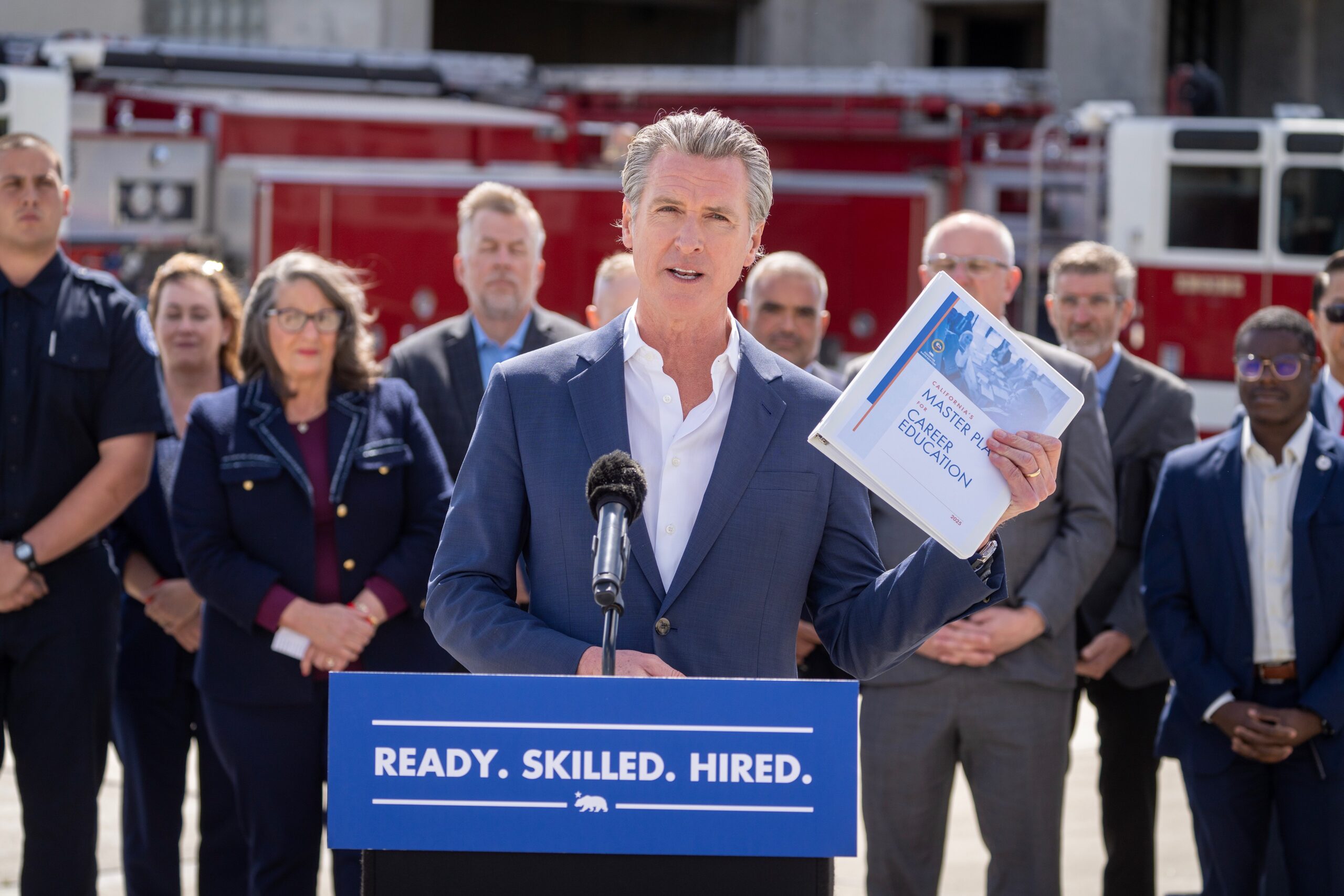
Governor Newsom unveils plan to create high-paying, fulfilling careers for more Californians, college degree or not

Career Passports and Credit for Prior Learning
To help Californians better showcase their skills, the January Budget proposes to launch Career Passports – a digital tool that combines academic records with verified experience from work, military service, training programs, and more. This skills-based record will help shift hiring away from degree-only requirements and open up more good jobs for workers of all backgrounds.
The plan also invests in expanding Credit for Prior Learning (CPL), allowing veterans and working Californians to turn real-world experience into college credit. This statewide push is expected to benefit 250,000 people — including 30,000 veterans — and generate billions in long-term economic gains by speeding up time to degree and cutting costs.
Together, these efforts help Californians get credit for what they already know — and put that knowledge to work.
Stronger state and regional coordination
To make career pathways more effective, the Master Plan calls for a new statewide collaborative to align education, training, and hiring needs. This body will help track labor market trends, reduce duplication, build smarter workforce strategies, and better support students throughout their educational careers.
Locally, the plan supports stronger regional partnerships — expanding paid internships, streamlining funding, and engaging employers to identify in-demand skills. The goal: create seamless, real-world pathways from the classroom to the job site.
You can read the full Master Plan HERE.

How we got here
In the 1960s, California’s Master Plan for Higher Education established a clear structure for its postsecondary systems (Community Colleges, CSU, and UC), based on a labor market requiring minimal formal education. However, as the 21st century has progressed, California’s economy has evolved. To meet the demands of a rapidly changing workforce, including the rise of artificial intelligence, educational institutions must adapt and develop strategies that support continuous upskilling throughout students’ careers.
In recognition of this, in August 2023, Governor Newsom launched a new way forward through the Freedom to Succeed Executive Order. The culmination of those efforts, the Master Plan for Career Education provides a strategy for responding to the complex, multifaceted challenges confronting California’s labor market and educational landscape. It acknowledges the shifting demographics of college attendees and the changing nature of work — with automation and artificial intelligence reshaping job categories and skill requirements — and provides flexibility to address new challenges that will emerge in the future. The statewide effort has been led by a public-private partnership with philanthropy.
The initial framework for the Master Plan was first released in December at Shasta Community College.

link