First-Gen Lotus Elise Restomod Borrows McLaren F1’s Central Seating Position
The Lotus Elise was a return to form for the British automaker when the model launched at the 1995 Frankfurt Motor Show – on this very day, 30 years ago. It replaced the odd 1990s version of the Elan roadster, which was front-wheel drive. Plus, by this time, the Esprit had evolved into more of a grand touring car, rather than a hardcore sports coupe. Meanwhile, the Elise went back to basics by weighing 1,598 pounds and packing a mid-mounted four-cylinder engine driving the rear wheels.
British company Analogue Automotive specializes in restoring and upgrading Lotus models. The firm’s latest project is the VHPK, which thoroughly overhauls the first-generation Elise. Most notably, the work includes putting the driver in the center of the vehicle, meaning the machine is now a single-seater a la McLaren F1.
An Elise Restomod Is Here
Analogue Automotive’s Founder and CEO Steffen Dobke told CarBuzz that “VHPK is a play on the Lotus VHPD (Very High Power Derivative) 1.8 K-Series [engine].” The car’s central driving position takes inspiration from the Elises competing in the Autobytel Lotus Championship, which started in 2000. The specially prepared vehicles for this one-make series had the driver sitting in the middle, like the VHPK.
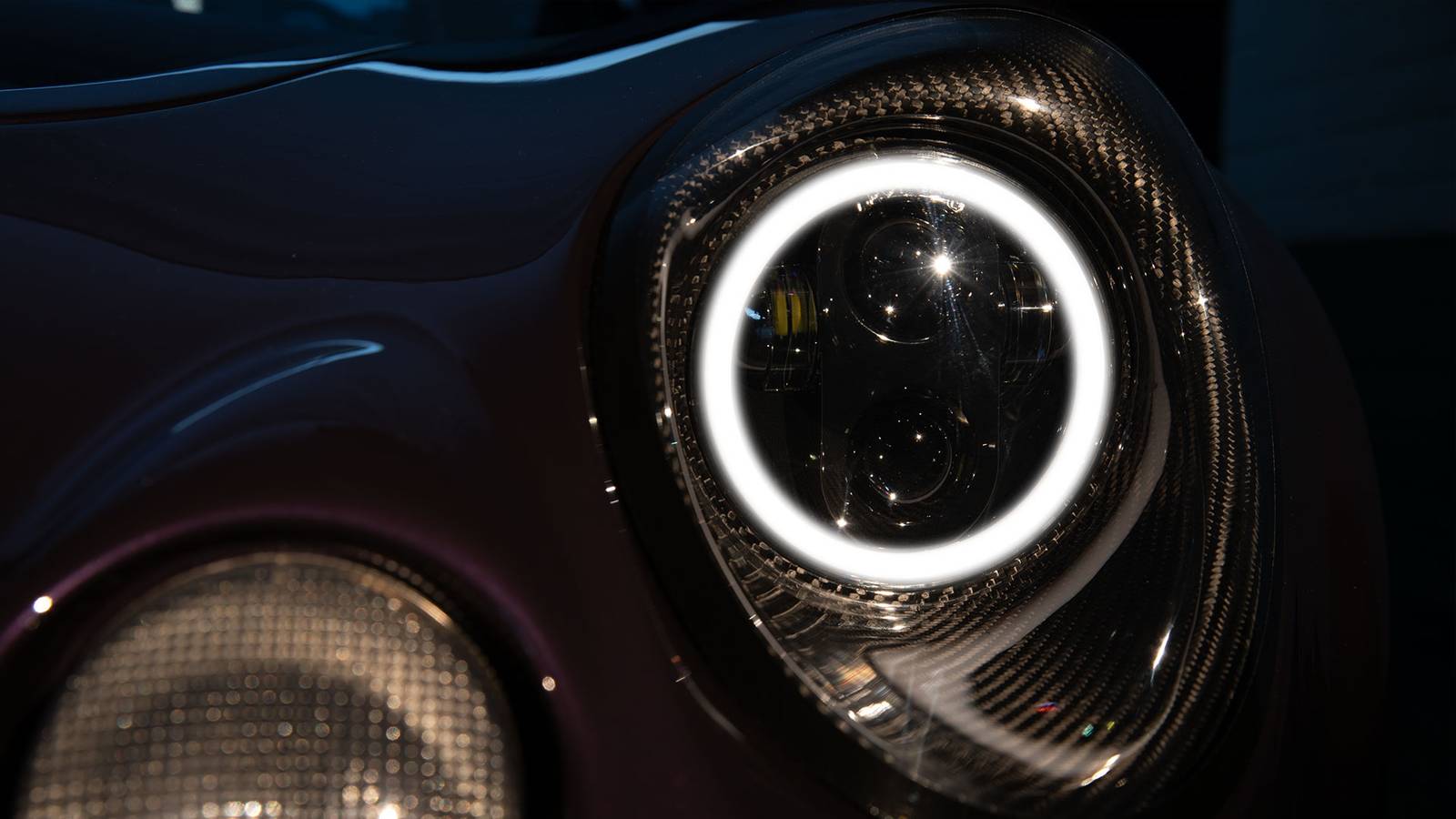
To save weight, the bodywork is entirely carbon fiber. The wheels are also carbon, and there are carbon-ceramic brake discs. There’s extensive use of the lightweight material in the cabin, too. The result is a roadster that weighs just 1,323 pounds.
The original Elise launched with the 1.8-liter Rover K-series four-cylinder engine, making 118 horsepower. Analogue Automotive bores the power plant to 1.9 liters with the company’s own liners, pistons, billet crankshaft, and forged internals. It also has a full motorsport harness and a Motec ECU. These upgrades push the output to over 250 horsepower.

No performance specs are available yet. “The first dynamic reviews will be in Spring 26′ with full production/deliveries following shortly after,” Dobke said. For context, the first-gen Elise with the original engine tune could reach 60 miles per hour in under six seconds. With significantly more power and less weight, the VHPK should be exciting to drive when it arrives.
Analogue Automotive only plans to build 35 VHPKs, with three of them already in production. Each one starts at roughly the current equivalent of $475,000 (£350K plus taxes).
A Little Elise History

Lotus started developing the model that became the Elise in 1994. Its model name came from Elisa Artioli, who was the granddaughter of Romano Artioli, who owned the brand at the time. The Artioli family no longer ran the business by the time the Elise went on sale in 1996, but at its global reveal, Elisa Artioli, aged just two and a half at the time, took part in its presentation at the Frankfurt Motor Show. She went on to own an Elise, and became the owner of the last-ever Lotus Elise to roll off the production line.
Following the launch, Lotus introduced the hotter 111S version in 1999, which increased the output to 143 hp. The Elise also spawned the hardtop Exige, which debuted at the first Autobytel Lotus Championship race in 2000, and packed a 177-hp version of the Rover K-series.

The first-gen Elise never made it to the United States, but the second iteration did. The new version had sharper styling than the previous look. The vehicle debuted in October 2000 and went on sale in the UK in 2001. It finally arrived in the US in 2005. Power now came from the mid-mounted 1.8-liter Toyota 2ZZ-GE four-cylinder, making 190 hp and 138 pound-feet of torque. The output was plenty for a roadster that only weighed around 2,000 pounds. In 2008, the supercharged Elise SC arrived with 218 hp.
The second-gen Elise lasted in the US until 2011. Lotus introduced a third generation, but never brought that version to America. Lotus retired the Elise name in 2021. The brand doesn’t have any roadsters in its current lineup. However, there are vague rumors about the Elise returning as an EV.
Source: Analogue Automotive
link